How Technology Enables Modern Sharing Economy Models

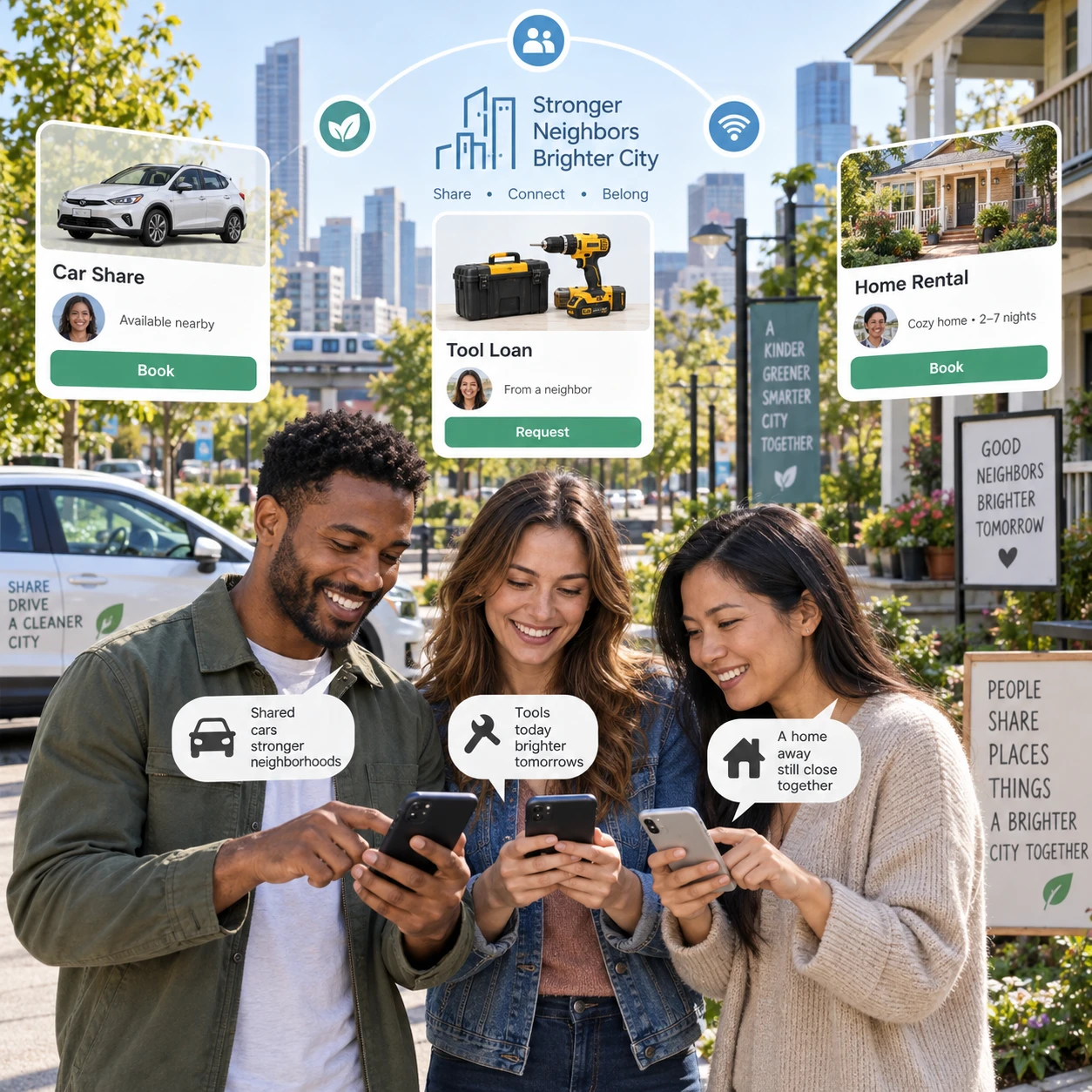
Technology gives people practical ways to find, arrange, and pay for shared access to goods and services. In the sharing economy, digital platforms can connect someone with an underused asset to someone who needs it, while tools such as mobile apps, identity checks, and user reviews help coordinate the exchange.
But an app alone does not make a service collaborative consumption. The key question is what people share, who provides it, and whether the model expands access to an existing resource or simply sells a conventional service through a digital channel.
What makes a sharing economy model?
A sharing economy model organizes access to goods or services among people or organizations, often through a digital platform. Collaborative consumption typically means using, renting, or exchanging resources instead of each participant owning a separate version.
Think of a resident renting out a spare room, a neighbor lending a power drill, or several people booking the same car at different times. In each case, the participant gets temporary use rather than permanent ownership. The arrangement may be peer-to-peer, with individuals sharing directly, or managed by a company that owns or coordinates the assets.
Access is the defining idea, not the technology. A website can help people arrange a tool loan, but the loan itself is the sharing activity. Conversely, ordering a newly produced item for delivery through an app does not automatically count as collaborative consumption. The platform may be digital while the underlying model remains conventional retail or service provision.
It helps to assess a model with three questions: Is an existing good or service being made available to additional users? Does a participant gain temporary access or use rather than ownership? And does the platform enable an exchange between users, providers, or asset owners? The more clearly a service answers yes, the stronger its connection to the sharing economy.
Digital platforms connect supply and demand
Digital platforms connect people who have something available with people looking for it. A peer-to-peer marketplace can bring listings, search, booking requests, and basic rules into one place, reducing the effort needed to arrange a shared good or service.
For example, someone seeking a ladder can search nearby listings, compare availability, and contact an owner. A person with an unused parking space can describe it, set available times, and respond to a request. The platform acts as an intermediary; it may handle discovery and coordination without owning the ladder or parking space itself.
Matching and recommendation systems help narrow a large set of options. They may use details such as location, availability, price, item type, or past searches to rank relevant listings. A good match needs more than a plausible result: it must be available when needed, accessible to the user, and clear about terms such as pickup, delivery, or cancellation.
These systems also have limits. Incomplete listings can produce poor matches, and ranking rules may favor providers with more bookings or reviews. A platform should make key information easy to compare so that users can judge options, rather than treating a recommendation as a guarantee of quality.
Mobile technology makes sharing convenient
Mobile apps make sharing easier by putting discovery, booking, communication, and coordination in one place. A user can search for an item, check its availability, arrange a pickup, and receive updates from a phone.
Location features can help people find nearby resources, while calendars show when a vehicle, workspace, or household item can be used. In-app messaging lets participants confirm practical details, such as where to meet or how to return an item. Notifications can remind both parties about an upcoming booking or a change in plans.
Convenience depends on the whole exchange. A quick booking is of little use if a renter cannot reach the item, understand its condition, or contact the owner when plans change. Clear listing details, accessible support, and a simple cancellation process matter as much as an attractive app interface.
Mobile-first design can also exclude people who lack reliable internet access, compatible devices, digital payment options, or confidence using apps. Some platforms address this with accessible interfaces, phone support, or alternative booking methods. Those choices add operational costs, but they can widen participation beyond users who are already comfortable with digital services.
Trust and safety tools support participation
Trust and safety tools help participants assess who they are dealing with and what to expect. Profiles, identity verification, user ratings, reviews, and platform policies can reduce uncertainty, though none removes risk completely.
Identity verification may ask a user to confirm details through a document, payment method, or other checks. The scope varies by platform, so a verification badge should not be read as a promise that every detail is accurate or that a transaction is risk-free. Users should still review the listing, communicate through appropriate channels, and understand how disputes are handled.
Ratings and reviews create a record of past experiences. A renter may describe whether an item matched its listing, while an owner may review how it was returned. Specific, recent feedback is usually more useful than a high score alone. Platforms can support better reviews by setting clear guidelines and giving users a way to report misleading or abusive content.
Policies complete the trust framework. Cancellation terms, damage procedures, prohibited conduct rules, and customer support define what happens when an exchange goes wrong. These protections can encourage participation, but they also depend on consistent enforcement. A platform that collects personal information for verification should explain what it gathers, why it is needed, and how it is protected.
Payments and data help platforms operate
Digital payments let platforms collect or transfer money for bookings, rentals, and service exchanges. Platform data can also help improve search, availability information, and recommendations, provided it is handled responsibly.
In-app payment tools can give users a common checkout process and create transaction records. Depending on the service, a platform may process a payment at booking, release funds after an exchange, or account for a deposit. The exact arrangement matters: users should be able to see fees, refund rules, and any payment protections before confirming.
Operational data can reveal friction points. If users often abandon bookings after seeing a fee, the platform can make pricing clearer earlier. If searches frequently return unavailable items, it may need better calendar tools or more accurate listing updates. These improvements can make sharing more reliable, but they do not guarantee that supply will match demand in every location.
Data collection brings a trade-off. Location history, identity details, and transaction records may be useful for service delivery, yet they can expose sensitive information if retained or shared unnecessarily. Platforms should limit collection to a clear purpose, secure stored information, and provide understandable privacy controls. Users, in turn, can check permissions and avoid sharing details that the exchange does not require.
Benefits and limitations of technology-enabled sharing
Technology-enabled sharing can make underused resources easier to access and help people coordinate exchanges. Its benefits depend on local supply, fair platform rules, reliable service, and whether participants can use the tools.
For a household that needs a drill once a year, borrowing or renting may cost less and take up less storage than buying one. A spare room or car that would otherwise sit unused may serve another person. These arrangements can improve use of existing resources, but environmental gains are not automatic: extra travel, new demand, or frequent deliveries can offset some potential benefits.
There are also broader limitations. Digital access is uneven, and platform fees or ranking systems can shape who earns income and who finds a service. Providers may depend on a marketplace’s policies, visibility, and account decisions. Users may face unclear recourse when an exchange fails, especially if customer support is limited.
- Privacy: Sharing platforms may collect identity, location, and payment data. Check what is necessary and how it is used.
- Unequal access: Smartphone, internet, payment, or accessibility barriers can keep some people out.
- Platform dependence: A change in fees, search rankings, or account rules can affect both providers and users.
- Uncertain outcomes: A shared option may be cheaper or more resource-efficient in one situation and less so in another.
A useful way to judge a service is to look beyond convenience: identify the resource being shared, compare the full cost with alternatives, check who sets the rules, and ask what happens if something goes wrong. This keeps the focus on collaborative consumption rather than assuming every app-based transaction benefits everyone equally.
What technology may mean for sharing models
Emerging technology may make shared access easier to coordinate, but the central test remains whether people can use resources collaboratively on fair and workable terms. Better tools matter only when they solve real problems for participants.
More accurate availability systems could reduce failed bookings. Improved accessibility features may help people with different needs use a marketplace. Digital identity tools might make account checks more consistent, while also raising questions about data retention and exclusion when someone cannot complete a check.
Future sharing models may also combine digital coordination with local, in-person networks. A neighborhood platform, for instance, could help residents find available equipment while a community group sets lending rules and provides a place for pickup. This kind of hybrid model can offer context and accountability that an app alone may not provide, though it still needs clear responsibility for maintenance, disputes, and access.
Technology enables modern sharing economy models by lowering the practical hurdles of finding, booking, paying for, and coordinating shared goods and services. Whether a model genuinely supports collaborative consumption depends on how it treats access, participants, privacy, and responsibility—not on whether it has an app.